Most artists I talk to describe the same moment. The song is good, and they know it’s good. But the recording doesn’t sound like the song they hear in their head.
That gap between the song you wrote and the record people actually hear is where a music producer works.
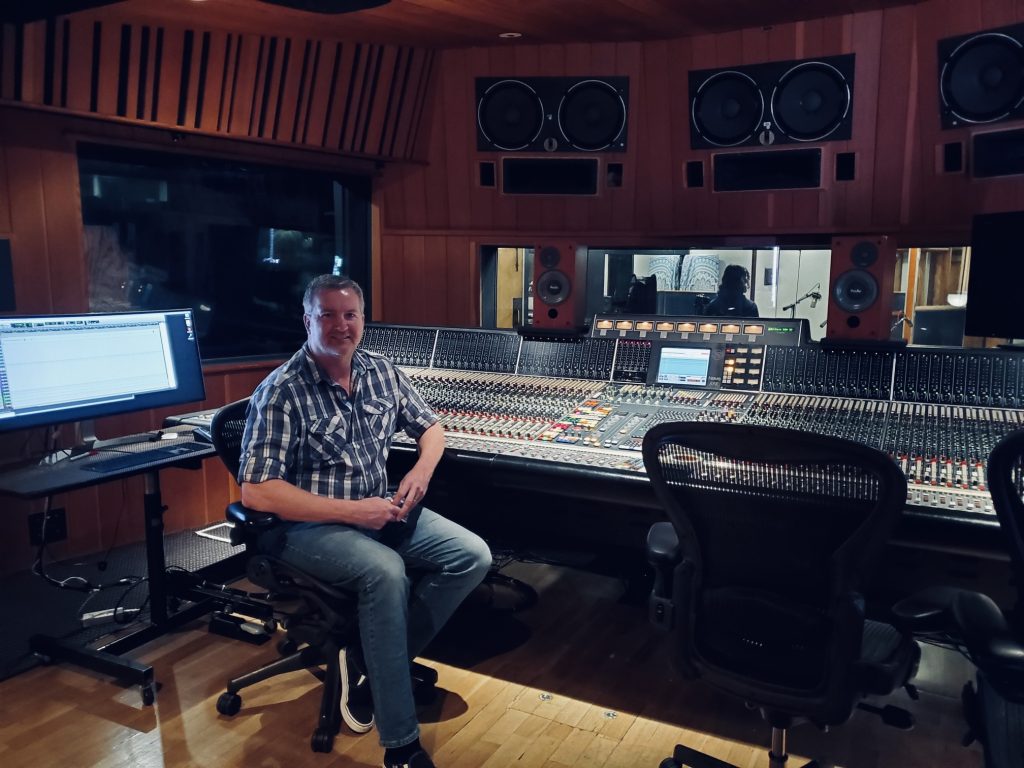
I’ve been on both sides of the glass. In the ’90s I played lead guitar in the rock band MoonRage. We put out two albums on independent labels and played hundreds of shows across New England, New York and Ontario. Today I work as a rock music producer at Zephyr Sound, making records with rock and indie artists across New Jersey, the Lehigh Valley and beyond. Here’s what a producer actually does, and how that looks depending on where you’re starting.
What a rock music producer actually does
A producer is part creative partner, part project manager and part honest ear. It’s not just the person who presses record. That’s the engineer, though often the producer does both.
On a typical project, a producer:
- Shapes the song: structure, key, tempo, where it builds and where it breathes.
- Builds the arrangement: which instruments play, what each part does, and what to leave out.
- Draws out the performance: coaching vocals, choosing takes, knowing when you’ve got it.
- Owns the sound: mic choices, tones and the recording chain, then guiding the mix and master.
- Keeps the project moving: schedule, decisions and budget, so the record actually gets finished.
- Hears it like a listener: an outside perspective on a song you’ve heard a thousand times.
Not every artist needs all of that in the same measure. Most fall into one of two starting points.
If you’re a singer-songwriter with a song and a guitar
A lot of great songs start as a voice memo: one voice, one instrument. The song is there, but the record isn’t yet. This is where a producer does the most building.
Together, we work through:
- Pre-production. Finding the right key for your voice and the right tempo for the feel. Tightening structure, like the second verse that repeats the first or the chorus that arrives too late.
- Arrangement. Deciding what the song wants to become. A driving rock band with layered guitars? Indie pop built on synths, textures and a hook that sticks? Or room to stay sparse?
- Building the tracks. I play guitars, program drums, loops and synths, bring in musicians where the song calls for them, and track live drums at our partner studio.
- Recording you. Capturing your vocal, stacks and harmonies so they sit at the center of the record.
- Mixing and mastering. Finishing the song so it’s release-ready for Spotify, Apple Music and everywhere else.
You walk in with a song and walk out with a finished record. My songwriting training at Berklee taught me one rule above the rest: the producer’s job is to amplify what makes your song yours, not replace it.
In practice: Lianne Kaye’s “Glow”
“Glow” by indie artist Lianne Kaye started exactly this way: a vocal and an acoustic guitar. The song was strong, but it was asking to be bigger.
I built it into a full rock track. Layered electric guitars, hard-hitting drums and loops gave it drive, and a dramatic guitar solo gave it a peak. Through all of it, Lianne’s vocal stays at the center, because that’s what the song was built on.
Listen to “Glow” on SoundCloud
If you’re a band with the arrangement mostly worked out
Bands that have been playing their songs live usually have the arrangement figured out. The parts work, and the band knows the song. Here the job is different: capture what you already do, then make it bigger and clearer than a live room ever can.
That means:
- Recording-focused pre-production. Settling tempos and finding where parts collide, like guitar and keys fighting over the same space. Trimming intros and endings that work live but drag on a record.
- Tracking for feel. Live drums at our partner studio, cut together or part by part, depending on what the song needs.
- Guitar tones that translate. What sounds huge from your amp on stage doesn’t always hold up on headphones. Mic choice, amp settings and, when needed, reamping get you the version that does.
- Drums with real punch. The foundation of a rock record. If the drums don’t hit, nothing else will.
- The take with the feel. Not the cleanest take. The one that sounds like you.
- A mix with room for everyone. Guitars, keys and vocals each get their own space, so nothing gets buried.
The goal isn’t to turn you into a different band. It’s to make the record sound like your best night.
What that looks like in practice: 1499’s Love
I produced Love, the nine-track album from 1499, released in September 2026. 1499 is piano-driven rock with two lead vocalists, Sam and Gabrielle, driven drums and bass, and guitars layered in a wall of sound. Raw and powerful.
They came in with a bold idea: reimagine songs people already know and love. That’s harder than it sounds. Stay too close to the original and there’s no point. Stray too far and you lose what made people care.
My job was helping the band find that line on every track: where to strip back, where to let the two voices carry, and where to bring the full band crashing in. Track after track, that meant piano, big drums and layered electric guitars in place of the polished gloss people expected. Same songs, a whole new edge.
That’s the producer’s role with a band. I didn’t write their parts. I made sure every decision served the song, and that the album held together from the first track to the last.
When it’s time to bring in a producer
You’ll probably get the most out of a producer if:
- You have songs you believe in, but your home recordings don’t do them justice.
- You’re planning a release and want it to hold up next to everything else on a playlist.
- You’ve recorded before and it came out “fine,” but not exciting.
- A song has been 90% done for a year and you’re stuck.
- You’d rather spend your studio time and budget on decisions, not trial and error.
If you only need a rough demo to share with a bandmate, you may not need a producer. If strangers are going to hear it, you probably do.
Questions artists ask me
Will a producer change my sound? A good one shouldn’t. Indie records live on their rawness and character, and I’m not here to sand that off. You have the final say on your music; my job is to bring out what’s already there.
Do I need finished songs? No. That’s exactly what the singer-songwriter path is for.
Can we work remotely? Yes. I mix and master from files you send, and production can blend remote and in-person sessions.
What happens after the record is done? Zephyr Sound can also handle digital distribution, release planning and promotion, so your finished record has a real path to listeners.
Let’s talk about your songs
Whether you have a voice memo or a set you’ve been playing for years, the first step is a conversation. Book a free consult call. Tell me where you are, send a rough recording if you have one, and I’ll tell you honestly what I think your song needs.
Eric Welz is the Managing Partner and producer at Zephyr Sound, a music production and artist services company serving New Jersey, the Lehigh Valley, New York, Philadelphia and coastal Massachusetts.